Choosing a Bed for a Senior Dog: What Actually Matters
By Leonardo Fonseca · 2026-10-01
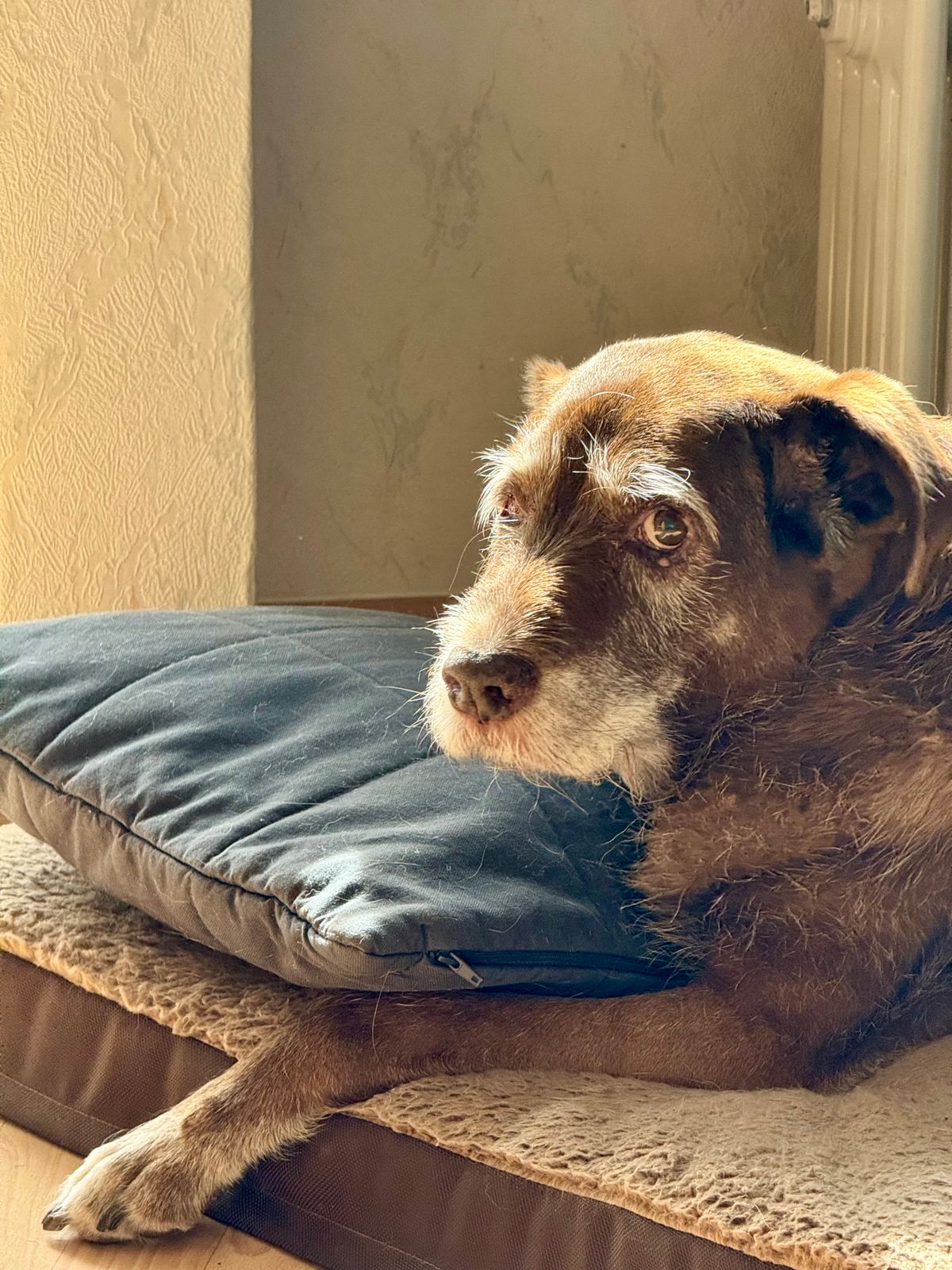
Beds are one of the products I get asked about most for older dogs, and they're also one where the price tag and the packaging tell you the least. "Orthopedic," "memory foam" and "joint support" show up on beds that flatten within weeks, and on beds that genuinely make a difference. After years of watching customers bring beds back, and watching which ones their dogs actually use, I've ended up with a short list of things that matter and a longer list of things that don't.
Why the bed matters more for an older dog
A senior dog spends a large part of the day lying down, and getting up is one of the most demanding movements an arthritic dog makes. It happens many times a day, every day. A bed that lets the dog sink, or that leaves the hips and elbows pressing through to a hard floor, makes each of those moments harder. Vets often point out that pain on getting up is one of the earliest signs owners notice in joint disease, which is exactly why the surface the dog gets up from deserves more thought than it usually gets.
A good bed won't treat arthritis. What it can do is stop the bed from adding to the problem, and in my experience that alone changes how willingly some dogs lie down and get up again.
What "orthopedic" should actually mean
The useful version of an orthopedic bed has a solid block of supportive foam that keeps its shape under the dog's weight. The less useful version has loose filling or shredded foam inside a cover, which clumps and shifts until the dog is lying on the floor with a fabric layer in between. Shredded fill feels soft in the store and fails at home.
Soft isn't the goal. A bed that's too soft lets a heavier dog sink in, and then the dog has to climb out of a hollow every time it stands. Memory foam on top of a firmer base tends to work well, because the top layer spreads pressure and the base keeps the dog from bottoming out.
The tests I do at the shop before recommending a bed
None of these need special equipment, and you can do every one of them in a store or the day a bed arrives at home:
- The press test: push a knee or a closed fist into the middle of the bed. If you feel the floor, a dog of any real size will too.
- The slide test: put the bed on a smooth floor and push it with your foot. A bed that slides when a dog steps on it is a fall waiting to happen.
- The edge test: check how high the dog has to step to get in. A tall mattress or a high rim is a climb for a dog with weak back legs.
- The cover test: unzip the cover. If it doesn't come off easily for washing, it won't get washed as often as it should.
- The liner check: look for a waterproof layer between the cover and the foam, since once urine soaks into foam it rarely comes out.
Bolsters: helpful for some dogs, an obstacle for others
Raised edges are popular, and plenty of dogs like resting their head on them or leaning against them. The tradeoff is that a bolster all the way around turns getting in and out into a step up. For a dog that is already struggling with its back end, I usually suggest a bed with bolsters on two or three sides and one low, open side to walk in from. Watching how your dog lies down gives the answer: dogs that curl up and lean tend to like bolsters, and dogs that stretch out flat often ignore them.
Size: measure the dog lying down, not standing
Owners often buy a bed based on the dog's weight or how it looks curled up. Many older dogs with stiff joints stretch out more than they used to, because curling tightly is uncomfortable. Measure your dog lying fully stretched on its side, nose to tail, and buy a bed that fits that, not the curled-up shape from when it was younger.
Where the bed goes matters as much as which bed it is
The best bed in the house doesn't help if it's in a spot the dog avoids. Older dogs tend to want to be near the family, out of drafts, and away from busy doorways where people step over them. A bed at the top of a staircase or in a room the dog has to cross a slippery floor to reach adds risk every time the dog uses it. For many households, two beds work better than one: one where the family spends the day, and one where the dog sleeps at night.
Heat, cooling and the dog that keeps choosing the floor
Some owners buy a good bed and then find the dog lying on the cold tile next to it. That usually tells you something. Foam holds heat, and some dogs, especially heavy-coated breeds, get too warm on it. A cooler cover fabric or placing the bed in a less sunny spot often fixes it. Other times the bed is too high or too soft for that particular dog. A dog that used to use its bed and stops, especially if it also seems stiffer getting up, is worth mentioning at the next vet visit, since the change can reflect more pain rather than a dislike of the bed.
What I tell customers
Buy for the dog you have now, not the dog you had five years ago. Firm, supportive foam, a non-slip base, an easy way in, and a washable cover with a waterproof liner cover most of what matters. Then watch your dog for a week. Where it chooses to lie, and how easily it gets up from there, will tell you more about whether the bed is right than any label on the box.