Grooming a Senior Dog: How to Adjust the Routine as Your Dog Ages
By Leonardo Fonseca · 2026-10-01
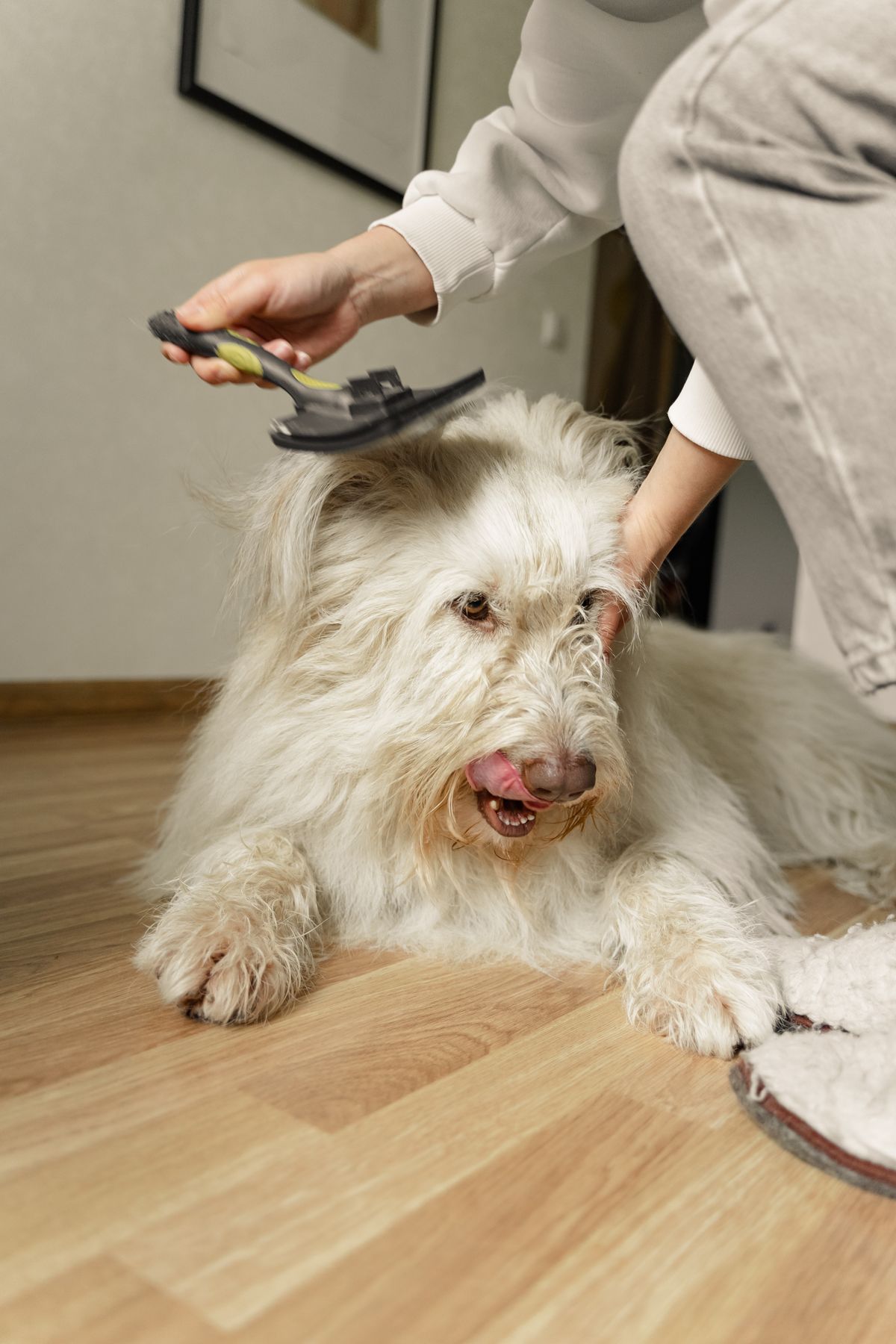
The grooming table is where I see aging up close. A dog I've groomed for years comes in one day and can't stand for as long as it used to, flinches when I lift a back leg, or has mats in places that were never a problem before. The coat and the body change with age, and the routine has to change with them. Most of what follows applies whether you groom at home or use a professional.
Shorter sessions, more breaks
Standing still for a long time is tiring for a dog with stiff joints, and a tired dog gets restless, which makes the session longer and harder for everyone. At home, the simplest fix is to split grooming into short sessions spread over a few days instead of one long one. Brushing can often be done with the dog lying on its side on a non-slip surface, turning it over halfway through, instead of asking it to stand the whole time.
Lifting legs deserves extra care. Pulling a back leg out to the side or up high to reach the paw can be painful for a dog with hip or knee problems. Keeping the leg low and close to the body, in the direction it naturally bends, is gentler.
Nails grow faster than they wear down
Older dogs usually walk less, and walk less on hard surfaces, so nails that used to wear down on their own start growing long. Long nails change how a dog places its feet, which matters more for a dog that is already unsteady. Trimming a small amount more often is easier on the dog than a big trim every couple of months. We cover this in more detail in our article on nail and paw care for senior dogs, including when grinding works better than clipping.
Bathing without the struggle
Bath time carries real risk for an older dog: slippery surfaces, being lifted awkwardly into a tub, and getting cold afterwards. A few changes make a big difference:
- Put a rubber mat in the tub or shower so the dog isn't fighting for footing the whole time
- Lift with one arm under the chest and one under the back end, never by the front legs alone
- Keep the water comfortably warm and the room free of drafts
- Dry thoroughly, especially thick coats, since older dogs tend to feel the cold more
- Use a dryer on low heat and low noise, or towel drying, for dogs that find dryers stressful
Coat changes to expect
Many senior dogs develop a thinner, drier coat, and some develop a coarser one. Mats tend to form in friction areas: behind the ears, under the front legs, along the side the dog usually lies on, and around the back end. A dog with mobility loss also scratches and shakes less effectively, so loose hair and debris that used to fall out on its own stay in the coat. More frequent, gentler brushing usually prevents mats better than an occasional hard dematting session, which can be uncomfortable on thinner, more sensitive skin.
Grooming doubles as a weekly health check
Grooming is often when owners and groomers notice changes first, simply because it's the only time anyone runs their hands over the whole dog. I'm not a vet, and neither is your groomer, so the point isn't to diagnose anything. The point is to notice and write things down: a new lump, a sore spot the dog reacts to, a change in skin color, an unusual smell from the ears, discharge from the eyes. Noting the location and size of a lump and when you first found it gives your vet much more to go on than "I think there's something on his side." Our article on skin lumps in senior pets goes into what vets want to know.
Choosing or briefing a groomer for an older dog
Not every grooming setup suits a senior dog, and it's fair to ask before booking. These are the questions I'd want a customer to ask me:
- Can the dog be groomed partly lying down, and are breaks built into the session?
- How long will the dog wait in a crate before and after, and can pickup be arranged to keep that short?
- Does the groomer want to know about arthritis, heart problems, hearing or vision loss before starting?
- Will they call you if they notice something unusual on the skin or if the dog seems in pain?
- Is the same groomer available each time, so the dog deals with a familiar person?
Tell the groomer about any condition your vet has diagnosed, and about any medication that could matter, such as pain medication schedules. A good groomer will adjust the session around that information rather than treating it as an inconvenience.
What I tell customers
Expect grooming to take a different shape as your dog ages: shorter, gentler, more frequent, and with more attention to comfort than to a perfect finish. A senior dog that ends a grooming session relaxed is a better result than a flawless cut on a dog that came out exhausted. And use the time to notice changes, then pass them on to your vet.