Setting Up a Senior-Friendly Home for a Dog With Mobility Loss
By Leonardo Fonseca · 2026-09-20
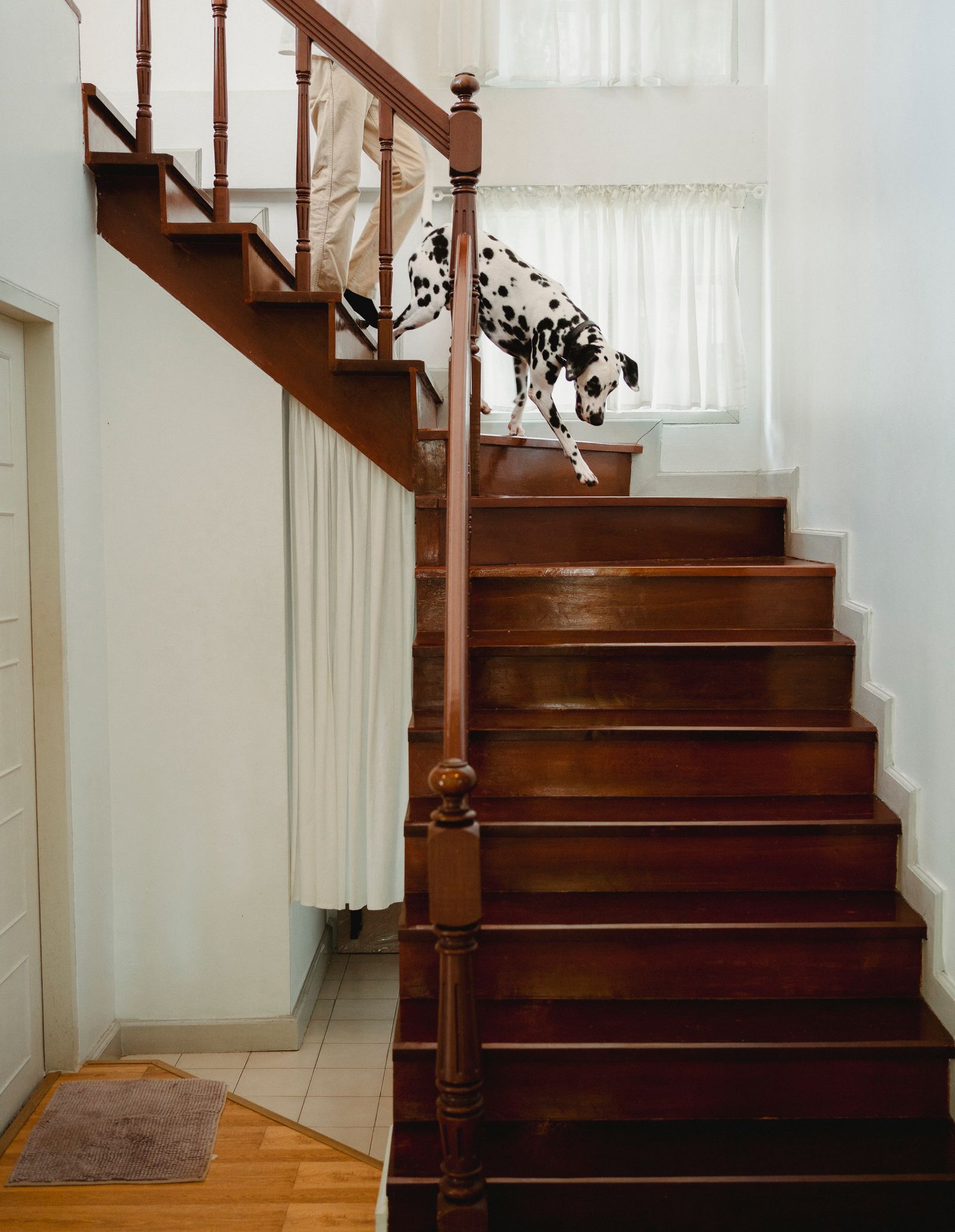
When a dog develops mobility issues, from arthritis, hip dysplasia, or general senior decline, most advice online repeats the same short list: get a ramp, add rugs. Both are useful, but they're not the highest-leverage changes, and I see customers implement them while missing bigger problems in the same home.
Flooring is the part that gets underestimated
Hardwood and tile are the biggest daily hazard for a dog with weak hips or reduced proprioception (the sense of where their limbs are in space), which declines with both arthritis and cognitive aging. Every step on a slick floor is a small stabilizing effort that adds fatigue and joint strain across the day, even without a visible slip. Runners or interlocking foam mats along the dog's main paths (food, water, door, favorite resting spot) matter more than a single rug in the living room. Think in terms of a full path, not a spot fix.
Where dogs actually get hurt: transitions, not straight walking
The injury risk isn't usually flat walking; it's transitions: standing up from lying down, turning corners, and stopping suddenly. A raised, supportive bed (not a flat cushion that lets the dog sink and struggle to push up) noticeably reduces the effort of standing up, which is one of the most joint-stressful movements for an arthritic dog performed dozens of times a day.
Ramps vs. stairs with a landing: the actual comparison
Ramps get recommended by default, but they're not always the better option. A long, steep ramp can be harder on a dog with hind-end weakness than a short set of pet stairs with a wide, stable landing, because a ramp requires sustained muscular control over a longer distance. For couches and beds specifically, I generally recommend pet stairs with a landing over a ramp unless the dog has significant front-end weakness too. This is the comparison I walk customers through at the shop most often. For entering a car or navigating a full flight of steps, a ramp is usually the better call. It's not one-size-fits-all: it depends on which end of the dog is weaker.
Water and food bowl height
Elevated bowls reduce strain on the neck and shoulders for a dog with spinal or front-leg arthritis, but they're not universally better: a dog with megaesophagus or certain neck issues actually needs a lower bowl. The generic "always elevate the bowls" advice isn't correct for every dog; it depends on the specific condition, which is worth confirming with a vet rather than assuming.
The change that matters most and gets skipped
Keeping a consistent furniture layout. Dogs with vision decline or cognitive changes build a mental map of the house; rearranging furniture, even slightly, removes that map and increases collision risk and disorientation. This costs nothing and gets overlooked constantly in favor of buying equipment.